Dear Investor,
In just a few weeks, the biggest FIFA World Cup of all time begins. If you follow football, you’re probably already looking forward to many exciting matches. Even if football isn’t your thing, it’s worth taking a closer look at the most important sponsors of this World Cup. Who are the immediate winners, and who benefits more over the long term?
The World Cup, as one of the most important sporting events held every 4 years, is a magnet for sponsors. At very few other events is global attention so immense that multinationals want to capitalize on it and are willing to pay a hefty price to do so.
We’ve selected some of the most important sponsors and analyzed them for you. We looked at the period during the World Cup, but also the developments before and after this event.
Adidas: an immediate beneficiary of the tournament
Adidas is one of the biggest, if not the biggest, sponsor of the football tournament. The world-famous sportswear manufacturer benefits directly from this event. Not only in the run-up, but also during the tournament itself, sporting goods are purchased in significant volumes, and merchandise items are highly popular among fans.
The very long-term trend for Adidas is upward, though it shows high volatility. The seasonal effect is most visible in the run-up to the World Cup. From early March to end of May, the stock has averaged gains of over 11% across 27 years. Only 2 years closed at a loss, averaging just around 6%.
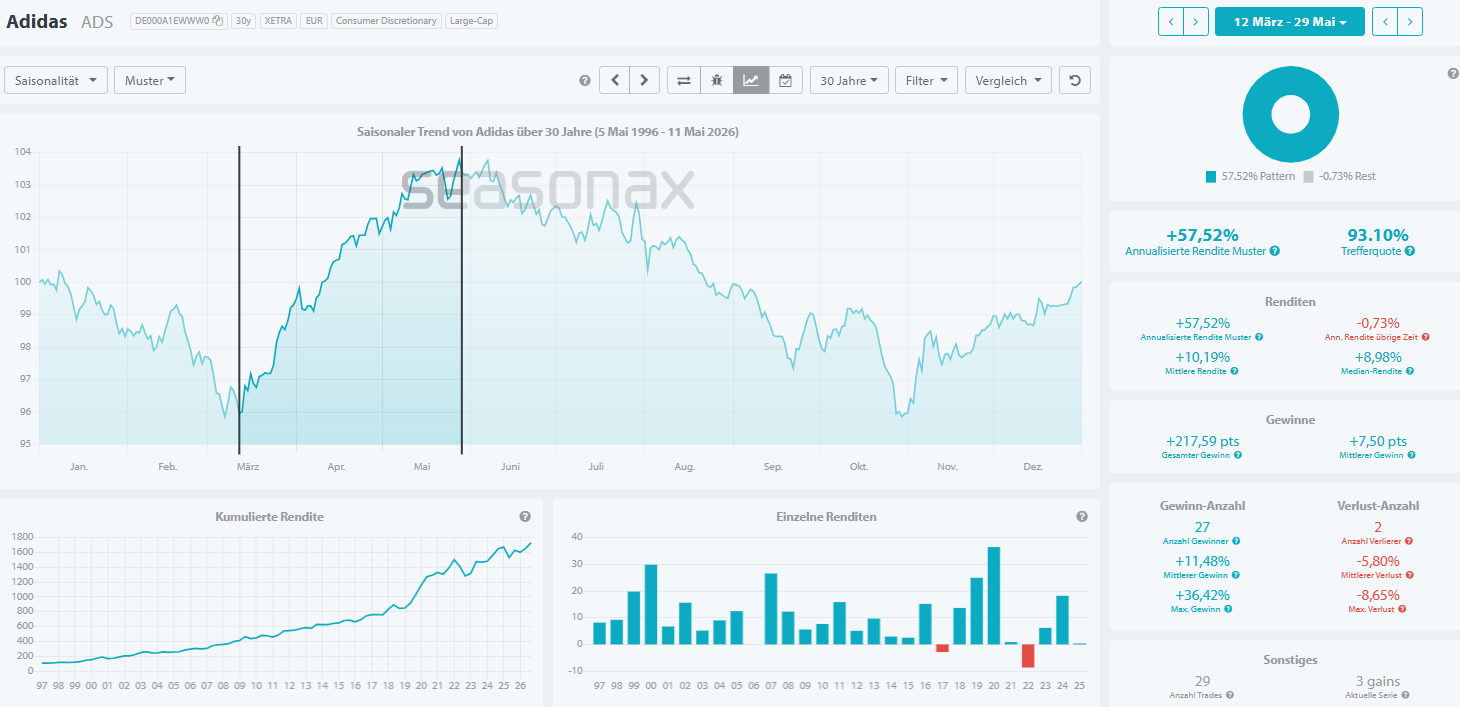
During the World Cup, the picture dims through to end of September, which is likely due to everyone having already stocked up on current jerseys or other items, with no immediate need for further purchases. This phase is still not ideal for a short position: the average results balance out at around 15%, and the years measured show 13 positive to 17 negative years in this period, which is not particularly pronounced.
Drinking never stops: Coca-Cola is one of the main sponsors
For Coca-Cola, the World Cup surely feels like a home game. Most matches take place in the USA, and even Canada and Mexico are nearby as neighboring countries and co-hosts. The stadiums will be pouring the various well-known soft drinks of the black sweet product.
The long-term upward trend at Coca-Cola is significantly less volatile than at Adidas. A long-term commitment is therefore less risky.
The seasonal phase during the World Cup looks worse at first glance than it really is. This is because 4 years stand out particularly negatively in the past 64 years. Even so, the ratio of 41 to 23 years is quite positive. In this short period, positive years generate average returns of nearly 5%.
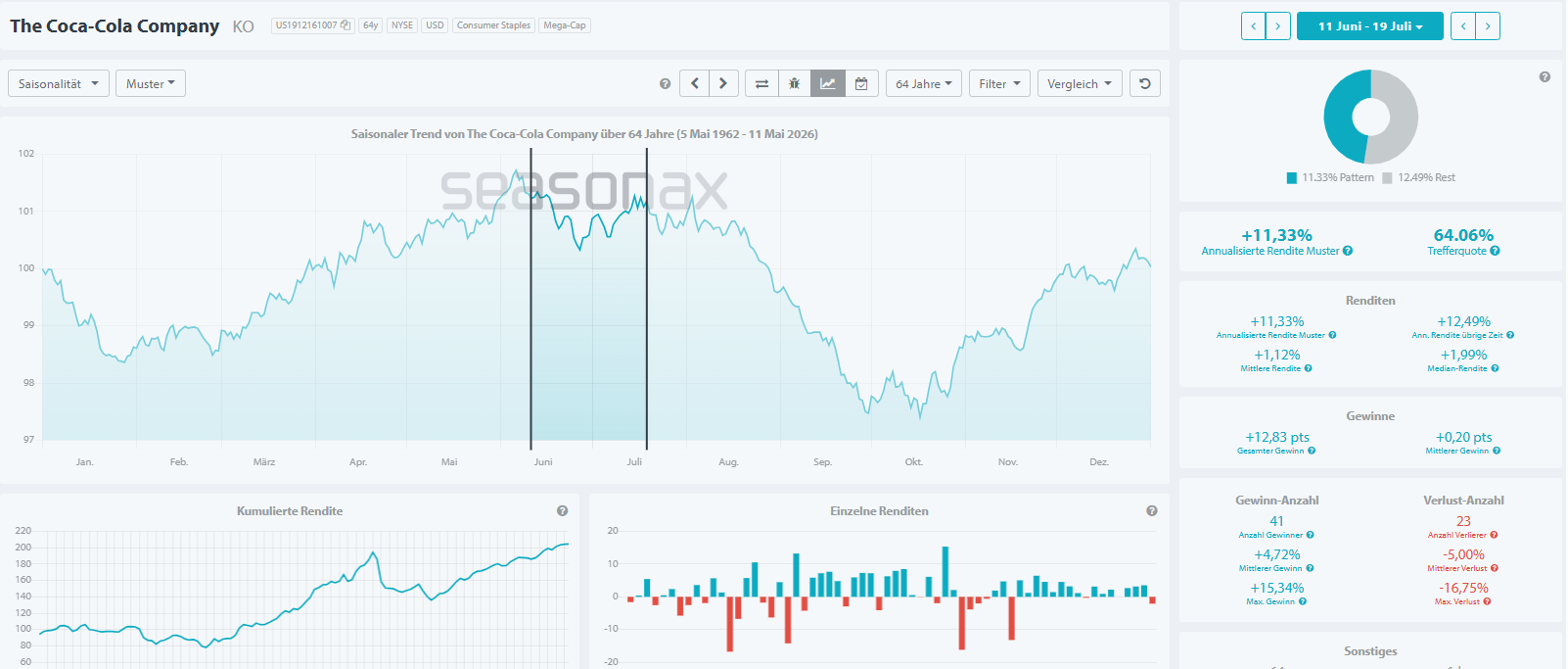
Similar to Adidas, the phase before the World Cup is even more pronounced, while the apparent drop after the tournament again shows a more balanced statistic.
Visa: will those inflated ticket prices be paid with this card provider?
These days, the enormous ticket prices for the World Cup stadiums are being sharply debated. For ordinary people, they are barely affordable. Add to that the accommodation prices near stadiums, which will surely skyrocket, and flights to America, which are also expected to rise during the World Cup period, not just because of the currently high fuel prices. Very few of these costs will be paid in cash. One of the largest payment service providers is Visa.
Even if not everyone pays with Visa, a large portion of the costs incurred will be settled cashlessly, and therefore also through Visa. Whether the World Cup actually has a decisive impact on Visa’s revenue and thus profit is hard to say with only 18 years of history. Nevertheless, Visa shows a long-term pronounced and low-volatility upward trend. The World Cup could provide an additional boost.
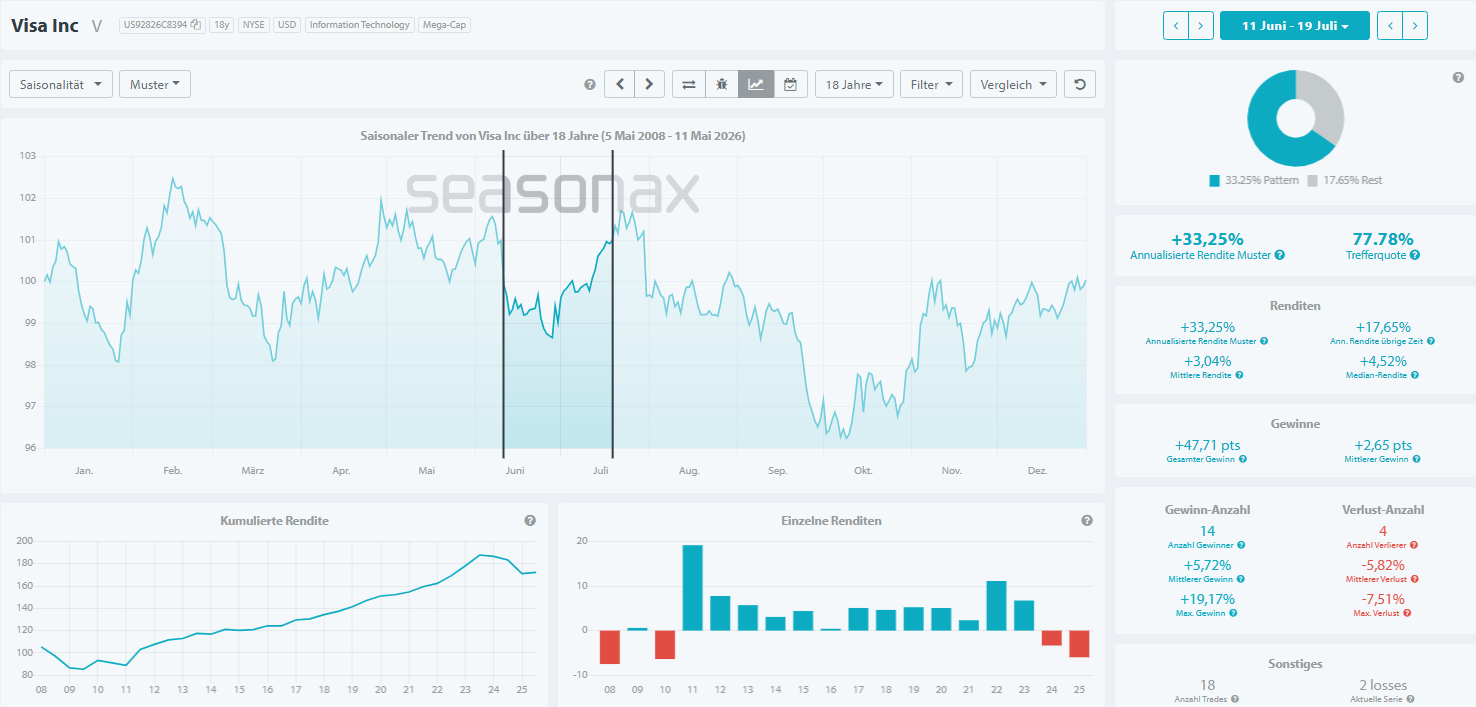
With 14 positive to 4 negative years, the statistical effect is certainly noteworthy. Nearly 6% is earned on average in the short period of the tournament. Even in the 4 negative years in this period, losses of close to 6% have to be absorbed. But the ratio of positive to negative years speaks for itself.
Does it make sense to limit the analysis to World Cup years only?
If you’re analyzing a specific event, shouldn’t you only consider the years in which a FIFA World Cup actually took place? That argument is valid, but it quickly runs into a few problems. The first is the time window, which varies by several days from one World Cup to the next. In addition, one World Cup took place not in summer but in winter. Furthermore, this World Cup is significantly longer than previous ones, as many more teams are participating.
Another issue is the amount of data available for the stocks analyzed. While Coca-Cola offers 64 years of data covering 16 World Cups, only 4 World Cups fall within the 18-year window for Visa. The Coca-Cola statistic is particularly strong at 11 to 4 years (excluding 2022, which had a winter World Cup). But beware: in 1974 and 2002, when Germany won and finished runner-up, Coca-Cola lost over 16% in the World Cup period each time.
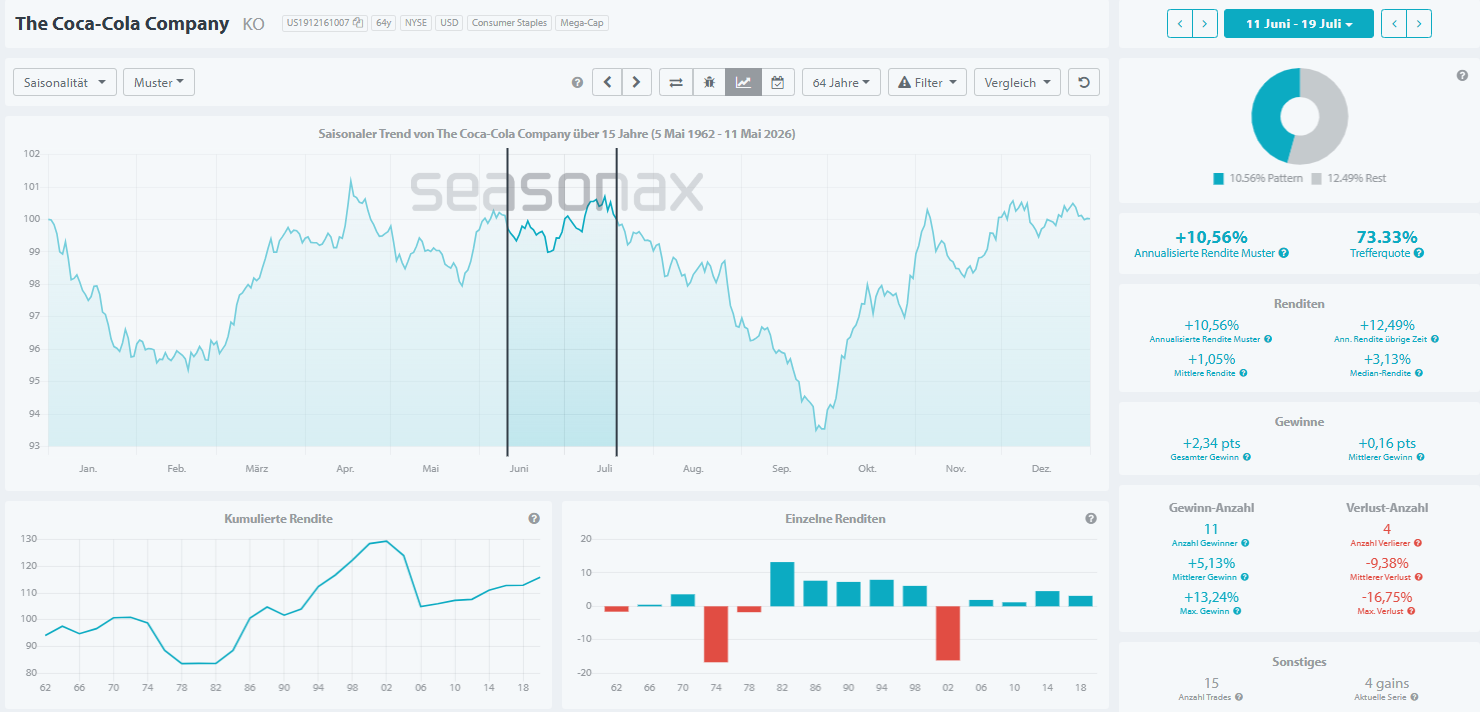
For simplicity, we therefore focused on the summer months of this year’s World Cup.
Conclusion: a great World Cup for you, with partly good prospects for the sponsors
While Adidas can benefit directly from the World Cup through the sale of sporting goods, Coca-Cola (even with its soft drinks being served in the stadiums) is more about long-term branding. A similar picture emerges for Visa, which is also likely banking on the attention effect.
Of course we hope it will be a great football World Cup, and from a German perspective, that our team’s performance brings joy to Germany. Those following the games with friends might still be dreaming of a projector screen for an even bigger football experience (provided Germany plays the inspiring football we all wish for).
Earn yourself that purchase with the World Cup sponsors and Seasonax, and enjoy many exciting moments both on the pitch and in the markets.
Seasonax wishes you a wonderful World Cup and our team every success with inspiring and victorious matches.
Take advantage of the benefits and use Seasonax for your professional approach to seasonal patterns!
Kind regards,
Christoph Geyer, CFTe
Winner of the Stock Analyst Award for Technical Analysis